Saturday, February 18, 2017

Toybox Episode 102: "I'm not a wrench, I'm a W.R.E.N.C.H.!"

TM and © 2017 Monte Cook Games, LLC.

The Toybox crew explores ancient ruins and discovers some of the dangers that can be found within the world of Vendernovem.

What follows is an account of the events during a session of my Toybox Campaign. This summary is written out in a prose format which may, for the sake of telling a story to a wider audience, take liberties with the events.

Thursday, February 16, 2017

Value of Fiction: Entertainment

One of the things that I come back to and question from time to time is if my creative endeavors have meaning or value beyond just something for me to do. (Yes, RPG stuff is also something for me to do with friends, but I could spend that time with friends doing something else just as easily-significantly moreso really.)

In thinking about that, I think about ways that I could make my creative endeavors more valuable and how to have them provide a more fulfilling experience for my audience.

To this end, I intend to write a few posts over time on ways in which fiction can be valuable.

I had started a post about how fiction can be used to inspire empathy, but it ended up fairly rambely/contradictory/complicated. I still intend to finish that post, but I'll start my Value of Fiction posts off with something more straightforward: Entertainment.
I don't think people can argue with the idea that fiction can provide entertainment. So, rather than trying to talk about how fiction is entertaining, I'm going to talk in defense of fiction providing entertainment.
I think that there's a tendency for people, even myself, to look down on others or themselves for spending time doing things just for the sake of entertainment. It's sometimes seen as a "waste of time." I think that this can be true, but that taken in moderation, entertainment can hold great value.

Risk: Entertainment is a Drug

Before I get into why entertainment is good, I'm going to comment on it's danger. Entertainment is great for being able to escape the troubles of the world, to rest, to feel better. However, there is the possibility that entertainment can become too enticing. It can become an addiction that someone can't go without. It can become a crutch which is used to avoid real responsibility.
Balance is very important.

Entertainment for Rest

Life is stressful.

In talking to people throughout my life, I believe this is almost universally true. Especially in our current culture, there is a drive to fill every moment and constantly be moving. This could be productive things, it could be spending time with friends and family, it could be work, it could be studies, it could be volunteering, it could be a hobby, it could be any number of things, but it comes down to: we fill our time.

It is nice to take a breath. It is nice to relax. For me, and I believe for many others, entertainment can allow for this.

Stress has serious consequences. It makes it so that we are less efficient and less able to handle all those other things we fill our time with. It disrupts us emotionally and mentally, making everything more difficult and therefore, cyclically more stressful. In addition to this, it's been shown to have lasting long term health consequences.

Finding rest helps us to release some of that stress and better cope with the responsibilities that we have upon us.

Of course, there are other ways of doing this as well. Exercise is a valid option. And it will probably continue to be for a lot of my other reasons for entertainment. I mean, for some people, exercise is entertainment. So, maybe you'll have to wait for more "Value of Fiction" posts for more differentiation between fiction and exercise.

Entertainment for Escape

This isn't all that different from rest, but perhaps with a different form of relief. In addition to life being stressful because of our own obligations, life can just be depressing sometimes. There's so much suffering and bad in the world, be it in our own lives or the lives of others, and it's hard to deal with. A lot of times, things feel hopeless, and the world seems like a bad place to be.

Entertainment allows us to step away from all of that for a time. And that is worth something.

HOWEVER, one has to keep in mind to not escape too much and to lose touch with the real world.

Entertainment for Happiness

There's something joyful about a good story. Maybe it's a comedy that makes you laugh. Maybe you feel happy about the main characters' accomplishments. Either way, the best stories are the ones that can really reach down and help us to not just feel safe and separate from the dark and depressing elements of our lives, but actively happy. This is something great, and something that might be one of the greatest goods fiction can provide.

Sunday, February 5, 2017

Toybox Episode 101: "What is with all the dead bodies?"


Six strangers awaken in a strange location with no memory of who they are or how they got there. Can they unravel the mysteries of this odd location?

What follows is an account of the events during a session of my Toybox Campaign. This summary is written out in a prose format which may, for the sake of telling a story to a wider audience, take

Friday, February 3, 2017

Roleplaying Tips for Players


I think that something I take for granted, as a Game Master, possibly something we all take for granted, is the idea that those playing tabletop roleplaying games know how to roleplay. Frankly, this just isn't true for everyone who will be playing with us. Sometimes, it isn't even true of ourselves.


I remember when I started in the first campaign that I would play in for an extended period of time. Most GM's don't really talk about roleplaying with their players in advance. Mine was no different, even though none of us had really played anything before. It's a tactic that I, too, have adopted in running my own campaigns most of the time. I think it's because we, as GMs, don't really think about the fact that roleplaying isn't inherently intuitive. I know that as a roleplayer without guidance, I developed a lot of bad habits that I wasn't even aware were wrong until a few years later when I was told by the GM and one other player-after I'd already been doing these things time and time again.


I know that I've also had players who do things that are problematic, not out of maliciousness, but just without knowing to do anything better.


The point is that things aren't necessarily straightforward. Therefore, I decided to try to put together the best advice I could come up with based on what I've seen go right and what I've seen go wrong in games I've run and played in.


The following advice is things to do as well as things not to do. It isn't just about improving your roleplaying ability, but it is also about improving your ability to roleplay together with a group and enjoy a story that is fun for everyone.


None of these rules are absolute. If you're playing Paranoia, you can probably ignore most/all of them.


1. Know Your Character

Almost everything that follows comes from this core point. Know who your character is. Know how they think. What's important to them? What motivates them? What are they afraid of? Each of us are a made of a sum of beliefs, motivations, fears, personality quirks, etc. Know what those are for your character, and it will help you play them.


Think about how their personality relates to the abilities they have. If they know a lot about history, what is it about history that interests them? If they have a lot of sneaky backstab abilities, what does that imply about them? Your characters mechanics are a part of who your character is. The things your character chooses to learn or excel at are things that relate to who they are as a person.


A lot of time, knowledge of your character will develop as a game develops. The more your character faces, the better idea you'll have of who they are, what they want, and how they react to things.


2. Always ask Why

This second rule is probably the most important strategy to developing good roleplaying skills.


Most things you do in real life, you just do without thinking about it. However, if someone asks you why you did that thing, usually you can come up with some answer. It should be the same for your character. The things your character does and says should be things your character has a reason to do. As you get to know your character, before taking actions or talking in character, quickly ask yourself "why is my character doing/saying this?" If you can't answer that question, then it might be best to do something different.


The longer you play as a particular character, the better you'll understand how that character thinks, what motivates them, and how they act. Your asking why will be less deliberate as assuming the role of the character becomes more natural for you.


3. Don't Act on Information Your Character Doesn't Have

One of the hardest things in the world for players, including myself, is to not use meta knowledge. There is a tendency to see the game as...well...a game. Something that we're trying to win. We want our characters to be victorious, and often we favor using meta knowledge even if that isn't something our characters would know. Depending on how the game is focused, this may be okay. However, it isn't good roleplaying.


If you know something about a creature or situation because of some prior experience, it's bad roleplaying to have your character act based on that experience. It isn't necessarily experience your character has. Unless you've worked out with the GM a situation where you've faced that sort of creature or situation in your character's backstory, then your character should be forced to depend on knowledge rolls or trial and error to figure it out (no, you shouldn't just happen to try the right thing first. Think about what your character would *actually* try if they didn't know what you know.)


Likewise, if another player character learns something via a knowledge check or a side encounter, your character should not be motivated to act based on this knowledge unless that player's character shares that information with yours.


When you ask "why is my character doing/saying this?" if your answer is "because I know X" or even "because of X" where X is something your character doesn't know, then you should probably do something else.


3m. Don't Talk About Information You Know but Shouldn't

Here's one that I'm bad at. If you know about a particular enemy or situation that your character doesn't know about, especially if other players don't know about that thing, don't mention your knowledge. If you tell them about the enemy or situation, you ruin their ability to learn for themselves, and you make them more inclined to roleplay badly. If you talk about knowing something but don't say what it is, then you risk irritating your friends, and you also break some of the realism of the game.


Generally, making a meta recommendation to a player whose character has a knowledge skill that might help them discover information about the enemy or situation is alright, but it may depend on your group and how that suggestion is made.


4. Develop Quirks, Mannerisms, or a "Thing"

It's easier to play your character if there is something unique and recurring about them. This might be a quirk, an accent, something in the manner they speak or walk, or maybe a hobby or obsession. Either way, it should be something that comes up relatively often and which you and your fellow players come to associate with your character. That way, there's a uniqueness to your character which can make them fun to play.


If you're having trouble with this, here are some questions to help you brainstorm:
  • Is there anything unique about how my character talks (accent, word choice, etc)?
  • Does my character have any physical mannerisms/ticks? (Bonus points if this is something you can actually physically do while seated at the table, as that will help to maintain the realism and sustain the imagination of the rest of the group.)
  • Is there any odd object that my character carries with him/her and/or collects?
  • Does my character do anything odd in their spare time?


5. Don't Insult Other Players/Player Character/Ideas

It doesn't matter if one of the defining attributes of your character is that they're a jackass, players don't like being put down. If you're roleplaying a jackass, sometimes the players on the receiving end can lose the sense of the line between game and real life, and can feel like you are attacking them personally, rather than your character tearing down their character. So, it may be good roleplaying, but it's bad playing overall. I've had groups where players have left or just felt awful while playing because of tension caused by other players who were just trying to roleplay.


This also goes for ideas proposed by other players. Even if we disagree with a strategy/idea/way of handling a problem or moving forward proposed by another player/player character, it is important that we handle the idea respectfully. If a player feels that you are shutting down their ideas or that you think they are stupid, then it may force them to shut down and be less likely to contribute in the future. This makes the game much less fun to that player, and isn't fair to them. This isn't to say that you should always support everyone's ideas, but if you disagree with them, you should express your disagreements in a friendly, respectful manner, being careful not to attack it or the person offering it.


Roleplaying is a high priority in most groups, but it shouldn't be prioritized above having an environment where people feel safe to share and have a good time.


Likewise, if you choose to roleplay a character who is a jerk, it makes sense for the rest of the group to roleplay people who don't want to hang out with a jerk, and you may lose your place in the group altogether.


6. Don't be a Lone Wolf

I think there's a tendency in some players, myself and some of my regular players included, to play characters who are a bit of a loner. These characters don't like relying on others, and they like going off on their own and doing their own things.


This...isn't the most conducive to a group roleplaying game. Tabletop roleplaying games are generally group activities, so it's important to make a character with that in mind. Even if your group doesn't start as a team together, they are all going to be working together through the duration of your adventure/campaign.


If you're playing a character who likes being on their own/doesn't trust or work well with others/otherwise would resist working with the group, it ends up meaning that either you get left behind-in which case you're no longer playing the game, or that something has to happen to force you to work with them. A lot of times, this is either the other players accepting you into the party despite your actions which would make most people disinterested in your participation, or the GM utilizing some 'hand of God' plot device to keep you all together until you learn to accept them. Both of these are a bit forced, and both of these cause issues with the suspension of disbelief of the group as a whole.


You don't have to play an easygoing extrovert character, but you should play a character who would be inclined to work together with the others in your party.


7. Act and React

Sometimes, games get a bit stagnant. I know that I, as a player, tend to freeze up if I can't think of the "right" thing to do. But, we have to remember that the game may be a game with definable objectives, it may be a story with a linear progression, but it also can be a world (depending on your GM's style) to be explored. Just like in real life, there's not always a "right" thing to do next. Nonetheless, something has got to happen. If your players are just sitting around in safety, it may be up to you to make that happen.


When the game seems stagnant, ask yourself "okay, what would my character do?" See if anything comes to mind. Think about any goals your character has-short or long term. Is there anything you can do to work towards them? Is there anywhere you can go that might provide your character with answers to questions they have? The important thing is to do something. And, when you do, the choices you make bring out more about who your character is and what's important to them.


8. Change and Grow

You aren't the same person you were a year ago. You certainly aren't the same person you were five years ago. The same is true for your character. As they go through different events, they are going to change. How are they affected by getting or failing to get what they want? How do their relationships (friendship, animosity, etc) with other members of the group or other NPCs grow over time? What do they learn from their struggles and adventures? How are they shaped by their victories? How are they shaped by their defeats? Do things that were once important to them become less important? Do other things take the place of that 'important thing?' Does their motivation grow and change with them?


Resources

If you want to read more tips and pieces of advice, check out the following articles.

Geek and Sundry:


Look Robot:


Tuesday, January 31, 2017

Alternate/Nested Realities

There's been a lot of thoughts lately about alternate realities. Recently a new event of the Mandala effect has been discovered with the Shazaam conspiracy. I saw a theory on the internet that noticed the majority of the Mandala effect discoveries that have been found after the Large Hadron Collider started up about eight years ago and that this caused some sort of reality shift. I don't really hold to this theory or that there's much/any reality to the Mandala effect in real life, but it does make an interesting story.

In addition to that, just looking at the news some days lately brings up a dissonance from reality. Certainly, people on opposing sides are seeing and reporting events/facts in ways that are so opposed it is as though they are living in different realities.

Since I'll be talking about alternate and nested realities, I figure it'd be good for me to tell you what I mean. These are not necessarily official definitions. By alternate realities, I mean realities that are similar to our reality/based on our/the main character's reality but with differences that make it stand out. By nested realities, I mean realities that are completely different from ours/that of the main character, but are accessed through our world and/or are found as a connected subset to it. I do not simply mean a world that is different from our world, but rather a reality that is in contrast to another that exists within the realm of the story in question.

So, with this, I give you some examples of alternate realities or nested realities that I find interesting.

1. Timelines

One of the popular ways that alternate realities seems to be messing with time to have different results. This usually leads to an alternate history type reality based upon whatever happened differently to have a different timeline. There are two primary ways that I've seen this done.

a. Multiverse of Choices

The theory is that every choice that anyone makes spawns a new reality where they made a different choice. Of course, these new realities will have ripple effects from that choice and branches based on every choice everyone else makes after that. In an alternate reality based on this, characters will find that someone did something differently. The changes can range from being minor/localized to being globally different depending on what choice or choices were made differently in that world.

A popular alternate history choice here is "What if the Nazi's won WWII?," as can be seen in The Man in the High Castle.

Note that once again, alternate histories, while interesting, are not alternate realities unless they are shown in contrast to a reality where things happened differently.

b. Time Traveling Meddlers

Time travel is a dangerous business. Anything you do has a risk of changing something, and any change and ripple outwards. Any person who died before that lives could have children that go on to be movers and shakers in the world that never existed before. Likewise, if someone dies who lived before, then all their descendants suddenly no longer exist.

Time travelers will often return to their present to find that their actions had incredibly unexpected consequences, leading the world to be very different from the one they left, from one they can no longer go back to.

c. The Past Itself

It's been said that the past is a different country. Even though the past of someone's reality is technically the same reality, the vast differences allow it to function much like an alternate or nested reality.

2. Magical Realms

This would be places line Narnia, Oz, Wonderland, Fillory, etc. These places are incredibly different from our own world. Often times, they are fantastical, with great magic and creatures that don't exist in the world that the main characters came from.

This creates an interesting device for storytellers, as it allows them to establish connection to the main characters and the audience, especially if the main characters are from a world similar to our own, as the main characters and audience will be exploring and learning about the world together. The main characters have no advantage having a lot of information that they take for granted that the audience isn't aware of.

This tactic often uses a degree of symbolism, with different parts of the fantastical world representing ideals, lessons, or things that directly relate to the main character's lives in the real world.

3. Digital Realms

Like magical realms, but with a sci fi twist. The characters find themselves transported into some other place-finding that it is all a simulation inside a computer somewhere. The only limitations are the imagination of whoever programed it. And just because it isn't "real" doesn't mean you can't get hurt or killed.

4. Imagination

The "alternate" world isn't real. It's all inside the imagination of the characters. This is particularly common for stories with children, like Rugrats. However, it could also come up with a story about a group of roleplaying gamers, or other ways. Just because it's imaginary, doesn't mean it's not important to the main characters and to the development of their story arcs overall.

What's your take on alternate realities? Do you like them in stories? Do you think they're overplayed? Can you think of other ways in which alternate or nested realities could be used in stories?

I do have to mention an idea I was discussing with my roleplaying group recently. I call it the reality nesting doll. You start with characters in a world not unlike our own. Then they get sent back in time. While back in time, they find a portal to another world. They get sent forward in time within that world (still probably not the same time they started out in, but still a different world anyway). They come across a computer that sucks them into a simulation where they meet with people who insist on playing a roleplaying game. (These could be done in any order, I just like the effect of continually going deeper into the layers of nested realities, especially if it's done in such a way that you can't just skip back to where you started, but have to go back through all the layers. It's an amusing idea, but I imagine audiences could tire of it pretty quick.)

Sidenote

I am now over 100 sales between my two cypher system adventures. I know that this isn't a lot for how long they've been out, but it still feels like a good milestone and I'm happy about it.

Tuesday, January 17, 2017

Projects Update

Here's a general update on what I'm working on and what stage it's at presently.

Author


Heroism and Other Lies

I honestly expected Episode 101 to be out by now. However, my editor has been held up due to unforeseen circumstances. I am hoping to have the edits before the end of the month, and then with my edits in hand it shouldn't be long before I can release the final product.

I have Episodes 2-4 written. Two will be sent to editing soon, but I'm still going to work to make some more revisions on 3 and 4 before sending them.

I have begun working on Episode 5.

Short Stories

I am working on two different short stories. The first is for an anthology that is being published in honor of Carrie Fisher. The proceeds of the sales will go to a charity supporting those with bipolar disorder.

Game Master


Toybox

By far my biggest creative focus right now is gearing up for my upcoming Toybox campaign. This campaign utilizes a tabletop game system of my own design and takes place in a setting heavily inspired by/based on Monte Cook Games' Numenera. While the setting is not directly the same as the Ninth World, it does have many of the same creatures and essential elements of it.

I'm hoping to post session summaries up here in story-form as the campaign progresses, but we'll see how that goes.

The first Toybox session will be January 26th-a little more than a week away-and I'm very much looking forward to it.

Looking Glass Moon

My surreal sci-fi setting for Cypher System isn't getting much attention at the moment. I've dropped the ball on this while focusing on other projects. I'm considering dropping this project altogether. However, if I do continue with it, I will probably roll out the setting incrementally, with various smaller books focusing on specific elements or parts of the setting rather than all at once in a huge volume. This way people can pick and choose the parts of Looking Glass Moon that they want to use, while choosing to overlook the rest.

Islands of Peril

I have recently been thinking about the Instant Adventures provided in Monte Cook Games' Weird Discoveries (Numenera) and Strange Revelations (The Strange), and I have to say that I like the format.

My first instinct was that the format of having the ability to pick up and play a session of Numenera (or really any RPG that I enjoy) without any prep seemed like an awesome idea with a lot of potential. Looking at some of the adventures, they seemed to flow nicely and have a format that played in with Node-based design, which I've mentioned in the past as something that makes interesting game sessions.

My second thought, after running one or two of these, was that these adventures are very short in comparison to what I normally think of when I think of running an RPG adventure. Not to mention that the ones I ran seemed pretty "easy" too.

This was disappointing to me, until I really thought about it. The intro to the adventures is pretty clear. They aren't trying to take the place of full RPG adventures. They're trying to fit, instead, into the slot that might be held by board games. To a degree, they're designed to be quicker and simpler. They're designed with the idea that the players may not be familiar with the system in mind.

This intrigued me as a way of introducing people who aren't familiar with tabletop RPGs to the hobby, which is something I think these sorts of adventures would do very well.

In my thinking about these sorts of adventures, I began to consider making one myself (and what that adventure might look like). One turned into more than one, and thus Islands of Peril was born.

Another thing that interested me was that the adventures in Weird Discoveries mention links to other adventures in the book, in a way that one story can lead to others. In this way, if you're playing with the same (or an overlapping) group of players, they can experience some interesting connections between their adventures. The problem that I had with it is that these adventures assume that the PCs never advance. They never gain new abilities (which sort of makes sense for the pick-up-and-play nature of the game.) In fact, in general it seems to me that there are very few cypher system adventures geared towards characters beyond Tier 1.

It is my hope to unveil 8 adventures in the Islands of Peril series which can be played stand-alone or as a linked campaign which takes the characters from Tier 1 all the way to Tier 6.

I have the skeleton of the first adventure completed, and look forward to working on the next seven.

Thursday, January 12, 2017

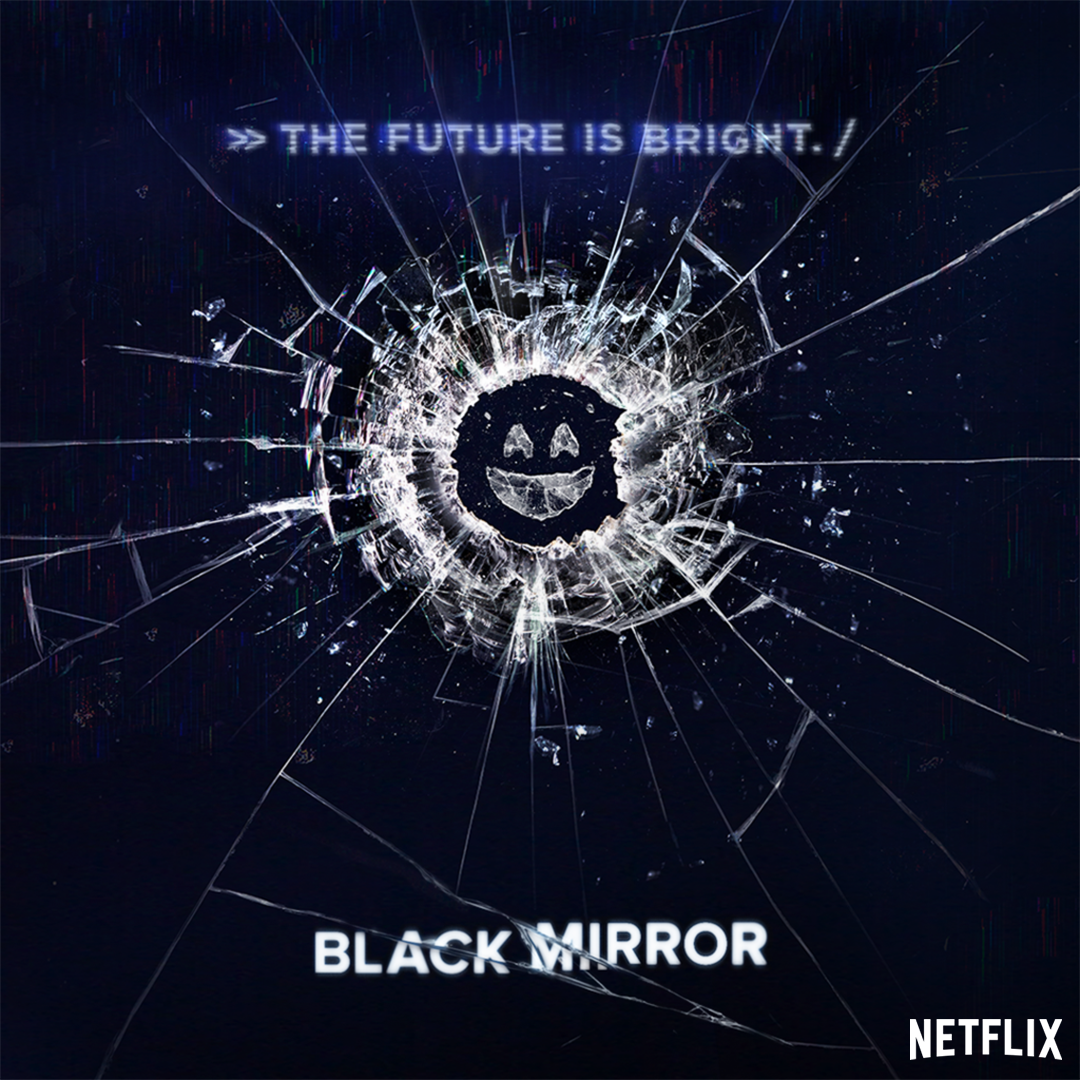
Black Mirror, Individuals, Society, and the Future

I've been watching Black Mirror lately (and by lately, I mean slowly over the course of several months.) I can't comment on how "good" it is, since that's hard to define. I will say that it is very smart and very well put together, but it's also very depressing. Maybe the most genuinely depressing thing I've ever watched (there are things I've watched that make me feel more depressed, but the feeling is just a fleeting emotional impact as opposed to Black Mirror's depression that is something deeper.)

In case you're not aware of the show, each episode of Black Mirror is self contained and takes some form of technology that is already changing how we interact and dials it up to 11 trying to demonstrate the worst thing that could possibly happen. For example, without being too spoiler-y, there is an episode where there is an online popularity/rating system and people rate other people in almost every interaction they have with them. This spills over into not just social interactions, but also for businesses only offering certain discounts or deals to people whose overall rating is of a particular height.

The main characters in these near-future dystopias always experience absolutely horrific events surrounding these technologies and how they've warped social interaction.

The thing that is so terrifying (and depressing) about the show is that every single episode pulls from technology that we're already familiar with. It pulls from interaction trends that we're already familiar with. It is easy to see how we are creating these terrifying futures.


However, I was thinking about it this morning, and something stood out to me:


The main characters experience the bad side of these worlds, but almost everyone else is completely happy with them.


A lot of times, the technology is embraced by a character who is portrayed to the audience as "bad." Maybe not evil, but usually at least a bit of a jerk. It creates this dichotomy in our minds. Even though the main characters aren't necessarily good people, we tend to empathize with them. The jerks embracing the "bad" technologies further restate the evils of these technologies to the minds of the audience.


But what about everyone else? What about the people who created and participate in this world? In general, people are accepting of the *thing*, be it a rating system, or contact lenses that record all their memories.


The point is, the horrific experiences of the protagonists are not the norm in their societies. The protagonists get the worst of it. They are the outliers. This seems like it's either an oversight on the part of the show, or it's an indication that within the rules of the settings, the technologies aren't actually that bad/aren't actually having that negative of an impact on most people's lives.


(Season 1 Episode 2 is sort of an exception to this, but that's also the episode where it seems the most like there are powerful people intentionally utilizing the technology to their advantage/to everyone else's disadvantage as opposed to the other episodes which seem to rely more on the technology gaining power via the people just embracing it on their own.)


Of course, I think that the truth is something simpler, and it doesn't have anything to do with the societies presented in Black Mirror or technology at all. It has to do with how we tell stories.


That is, when we tell stories, we focus on an individual. In Black Mirror, that individual is being used to show us the dark things of their world. We don't tell stories from the standpoint of society as a whole. Apart from not being sure how we would do that, we relate to people, not societies.


I mean, we can't even relate to our own society, how would we be supposed to relate to that of a hypothetical future world?


So, in Black Mirror, the point is driven home not by saying "society is suffering because of this," but rather by saying "this relatable person is suffering because of this." Our minds naturally make the jump to the first conclusion even though it doesn't necessarily hold true for the worlds in which the stories take place.


So, is it still valid to consider the points that the show makes?


Yes, I think so. While the experiences of the protagonists aren't the standard experiences of their societies, I think the warning is that their rate of occurrence might be higher if those same technologies were applied the same way to our society. I.e. if we used those technology, the horrific experiences might be the average experience. Or, at least, they could happen with greater frequency than they seem to in the show.

Of course, some of my question might be: If a significant number of people are/will be having this trouble with these technologies/societal structures, would our society as a whole allow it to get to that point of control? I want to say no, but there are a lot of existing structures that harm a great number of people a good portion of the time, so I could be wrong.

How it concerns me:
As I mentioned in an earlier post, the idea of building a better future is one that is near and dear to my heart. I am very pro-progress and the development of new technologies. My Heroism and Other Lies series tries to look at both the good and the bad sides of it, but it's less optimistic than something else I'd like to write later on.


It seems to me that a lot of futuristic sci fi is very pessimistic. I worry that this creates a society where we are afraid to look forward (instead choosing to fear the future, embracing nothing but nostalgia and present, fleeting, pleasures). I worry that it creates a society where we are afraid of progress. I want the sci fi that shows how cool technological development can be, and how it can and will make our lives better, not worse.


That said, I don't want us to just advance without thinking about the societal impact of things. I don't want us to advance without considering the philosophical and moral implications of what we're developing. I don't want profit-driven businesses to just push out new programs and technologies without considering the ramifications to society. Black Mirror serves a purpose of looking very critically at this angle. I think fiction that tries to prevent the bad futures serves an important role. I just am not sure it's reaching the people who need to hear it, and some of it is pulling down the people who could look upwards with hope.