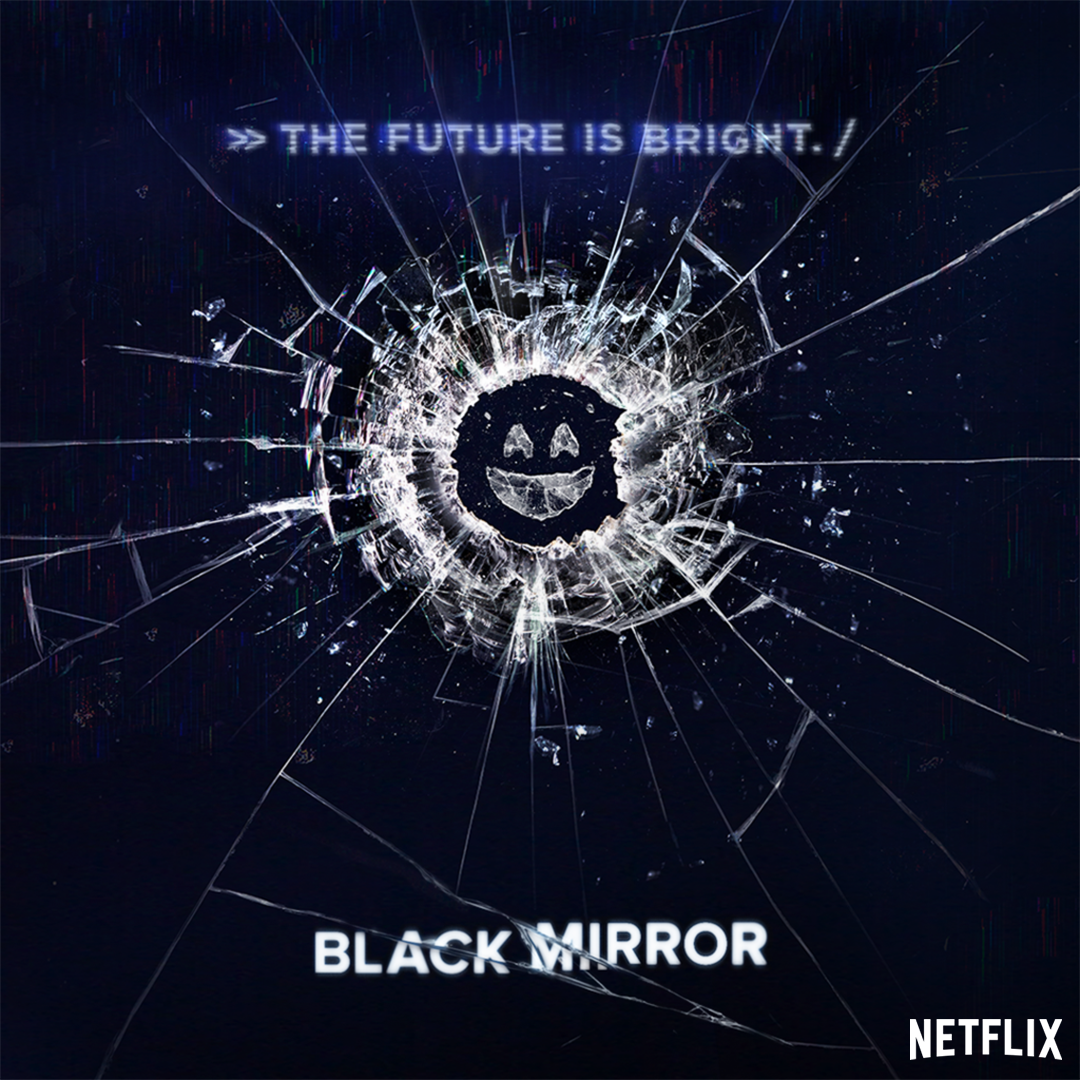
 I've been watching Black Mirror lately (and by lately, I mean slowly over the course of several months.) I can't comment on how "good" it is, since that's hard to define. I will say that it is very smart and very well put together, but it's also very depressing. Maybe the most genuinely depressing thing I've ever watched (there are things I've watched that make me feel more depressed, but the feeling is just a fleeting emotional impact as opposed to Black Mirror's depression that is something deeper.)
In case you're not aware of the show, each episode of Black Mirror is self contained and takes some form of technology that is already changing how we interact and dials it up to 11 trying to demonstrate the worst thing that could possibly happen. For example, without being too spoiler-y, there is an episode where there is an online popularity/rating system and people rate other people in almost every interaction they have with them. This spills over into not just social interactions, but also for businesses only offering certain discounts or deals to people whose overall rating is of a particular height.
The main characters in these near-future dystopias always experience absolutely horrific events surrounding these technologies and how they've warped social interaction.
The thing that is so terrifying (and depressing) about the show is that every single episode pulls from technology that we're already familiar with. It pulls from interaction trends that we're already familiar with. It is easy to see how we are creating these terrifying futures.
However, I was thinking about it this morning, and something stood out to me:
The main characters experience the bad side of these worlds, but almost everyone else is completely happy with them.
A lot of times, the technology is embraced by a character who is portrayed to the audience as "bad." Maybe not evil, but usually at least a bit of a jerk. It creates this dichotomy in our minds. Even though the main characters aren't necessarily good people, we tend to empathize with them. The jerks embracing the "bad" technologies further restate the evils of these technologies to the minds of the audience.
But what about everyone else? What about the people who created and participate in this world? In general, people are accepting of the *thing*, be it a rating system, or contact lenses that record all their memories.
The point is, the horrific experiences of the protagonists are not the norm in their societies. The protagonists get the worst of it. They are the outliers. This seems like it's either an oversight on the part of the show, or it's an indication that within the rules of the settings, the technologies aren't actually that bad/aren't actually having that negative of an impact on most people's lives.
(Season 1 Episode 2 is sort of an exception to this, but that's also the episode where it seems the most like there are powerful people intentionally utilizing the technology to their advantage/to everyone else's disadvantage as opposed to the other episodes which seem to rely more on the technology gaining power via the people just embracing it on their own.)
Of course, I think that the truth is something simpler, and it doesn't have anything to do with the societies presented in Black Mirror or technology at all. It has to do with how we tell stories.
That is, when we tell stories, we focus on an individual. In Black Mirror, that individual is being used to show us the dark things of their world. We don't tell stories from the standpoint of society as a whole. Apart from not being sure how we would do that, we relate to people, not societies.
I mean, we can't even relate to our own society, how would we be supposed to relate to that of a hypothetical future world?
So, in Black Mirror, the point is driven home not by saying "society is suffering because of this," but rather by saying "this relatable person is suffering because of this." Our minds naturally make the jump to the first conclusion even though it doesn't necessarily hold true for the worlds in which the stories take place.
So, is it still valid to consider the points that the show makes?
Yes, I think so. While the experiences of the protagonists aren't the standard experiences of their societies, I think the warning is that their rate of occurrence might be higher if those same technologies were applied the same way to our society. I.e. if we used those technology, the horrific experiences might be the average experience. Or, at least, they could happen with greater frequency than they seem to in the show.
Of course, some of my question might be: If a significant number of people are/will be having this trouble with these technologies/societal structures, would our society as a whole allow it to get to that point of control? I want to say no, but there are a lot of existing structures that harm a great number of people a good portion of the time, so I could be wrong.
How it concerns me:
As I mentioned in an earlier post, the idea of building a better future is one that is near and dear to my heart. I am very pro-progress and the development of new technologies. My Heroism and Other Lies series tries to look at both the good and the bad sides of it, but it's less optimistic than something else I'd like to write later on.
It seems to me that a lot of futuristic sci fi is very pessimistic. I worry that this creates a society where we are afraid to look forward (instead choosing to fear the future, embracing nothing but nostalgia and present, fleeting, pleasures). I worry that it creates a society where we are afraid of progress. I want the sci fi that shows how cool technological development can be, and how it can and will make our lives better, not worse.
That said, I don't want us to just advance without thinking about the societal impact of things. I don't want us to advance without considering the philosophical and moral implications of what we're developing. I don't want profit-driven businesses to just push out new programs and technologies without considering the ramifications to society. Black Mirror serves a purpose of looking very critically at this angle. I think fiction that tries to prevent the bad futures serves an important role. I just am not sure it's reaching the people who need to hear it, and some of it is pulling down the people who could look upwards with hope.
