Tuesday, November 1, 2016

Publication Day: Wonder Vault Heist

I have released my second Cypher System adventure, The Wonder Vault Heist.


If you've read my posts on heist adventures, this was the adventure I was designing that got me thinking about them.


This is a heist adventure designed for a science fantasy setting, but which could easily be converted to other settings/systems.


The heist revolves around a mechanical/mystical vault, left by the ancients, which can bend space and time, and the sinister group that controls it. As the players get closer to the wonder vault itself, they learn more about their enigmatic employer, and about the events of the past which tore a rip in space and time where the vault now stands.


If you haven't checked out my posts on running heist adventures and are interested in making/running your own, see the posts below:


Heist Adventures 1: 5 Challenges


Heist Adventures 2: Tips and Advice


Heist Adventures 3: Heist Campaigns

Monday, October 31, 2016

Cooperative Story-based Board Games and My Contradictory Nature


My favorite board game is Betrayal at the House on the Hill. I accept that it is not the best board game, it is still my favorite. Even though I'm not normally a fan of horror.


Betrayal Explanation

If you're not familiar with the game, I'll give a short explanation. In Betrayal, players are exploring an old mansion. The mansion is revealed room by room as room tiles are drawn from a deck and placed down to form the places the players are exploring. Different rooms may trigger varying frightening events or reward the players with items.


Partway through the game, an event will happen which will trigger the second phase, the haunt. When the haunt is triggered, players look at a chart to determine, based on the variables that started the haunt, what adventure they will be playing. There are 50 different scenarios (100 with the new expansion) that can occur. Usually, one of the players (often the one who triggered the haunt), will be the "traitor," and will take a role opposing the other players from that point forward. Depending on the situation, the traitor might be a vampire, or a madman trying to blow up the house, or a cultist bringing ghosts up from the dead, or many other things. Each scenario is unique, with unique objectives for the traitor and the players.


Why I like Betrayal

I like stories. They're some of my favorite things. Betrayal provides some of the fun of being able to experience an adventure together with friends that roleplaying games bring (with less depth, of course), without requiring someone to spend a lot of time prepping an adventure to GM.


I like exploring the house and seeing it form completely differently each time I play. I like all the different scenarios allowing me to get a new story/scenario each time I play.


Also, your characters have stats that can improve or be lowered throughout the game, so I like the RPG-like mechanic of being able to work to improve my character as I go along.


Some of it's Problems

I think some of the "best" board games are based more on skill than on luck. While Betrayal does offer the players some-possibly even many-choices, it is certainly more luck than skill. While the high level of randomness in room tiles, event cards, item cards, omen cards, and the adventure itself makes the game more interesting, it also makes the game less skill based. Things happen to the characters and they don't necessarily have much choice in it. It's easy to draw an event card that screws up everything for your character even if you've made all the right choices. You may have been building up your Might and Speed, and the haunt, when it's revealed, might be based on Intellect and Sanity, making your efforts prove to be in vain.


For me, I'm less concerned with being control when playing Betrayal. I'm not playing it for it to be a game of skill, so the randomness doesn't bother me so much. But, I know that for some people it does, and I know that isn't as good of a "game" because of it.


The other problem comes with the role of the traitor. The players have no control over who becomes the traitor, but once someone does, everyone else is against them. For some players, this is not an enjoyable experience. They feel like everyone else is ganging up on them, and they don't like being the enemy in something that is cooperative for everyone else.


I am among those who like being the traitor, so this experience doesn't bother me. However, I know people who have been alienated from the game from becoming the traitor on their first play.


Lately, I've been Looking for a Board Game that May not Exist.

I've been thinking about board games, and I've had a yearning for something that I'm not sure exists. Some of this comes from wanting a game that has elements of Betrayal, but with certain other distinctions.


2-6 Players
Betrayal at the House on the Hill is 3-6 players. Munchkin is 3-6 players. Vast is 1-5 players, but it definitely seems less fun with 1 or 2 players than when there are more.


A lot of the time I would like to play a board game is during time when my wife and I are hanging out. I want something that I can play with her and have a good time playing, but that we could also share with other friends of ours.


Cooperative
I like games where I get to work with people. Going along with the next point, I feel like having the players on the same team allows for better story/adventure potential. While I do enjoy games where I put my wit against that of other players, my current fixation is more focused on something that can be done together.


Story/Adventure
I'm looking for something that has something of a story/adventure to it. I want to be playing characters with a goal to overcome something, like the varying scenarios in Betrayal. I like the idea of something that feels like it has a plot arc to it-a beginning, middle, and end, where more is revealed as the story goes along.


Lots of Stories
Some games are designed around one specific story. In Vast, each of the characters has a motivation or reason that they are in the Cave, and an individual objective to carry out as their adventure/story. But these motivations are the same every single game. The story is an excuse to have these things with different mechanics to be acting against each other, rather than the other way around.


Betrayal has 50-100 stories. Even playing the same scenarios more than once, the changed positioning of rooms and other important things adds some interest (and the number of scenarios means that at least it's unlikely to play the same scenario twice close together.)


Optional: Character Advancement
I like things where my character advances, what can I say?


"It sounds like you want a tabletop RPG..."


Yes, you're very smart.


BUT the distinctions between what I want and a tabletop RPG are:
  • I want it to be playable with two players. (I want it to be playable with more too, but I want it to be able to go down to two)
  • I don't want either of the players to have to come up with the story
  • I want all the players to be able to work on a team as the adventurers/heroes. I do not want any to need to play the villain or to GM the scenario.
  • I want it to have a lot of replayability with varying stories/adventures/objectives for the players.
  • I want a complete story/game to be playable in one sitting (probably about an hour would be ideal, but I imagine that what I want would probably come out closer to 2).
"Do you know about...?"
While I do want suggestions, if any of you know of a solution that I am not aware of, here are some things I have thought about or looked into, and why I don't think they fit what I want.


  • Betrayal at the House on the Hill-Need 3 players, one player ends up not being cooperative.
  • Munchkin-Need 3 players, all players competitive
  • Vast-All players competitive
  • Order of the Stick-While I haven't played this game, it seems like despite having a degree of randomness to the dungeon, the story itself is always the same.
  • D&D games like Castle Ravenloft-I haven't played these either, largely because the price is somewhat prohibitive for something I'm not sure I'll enjoy; However, my understanding is that they a) take forever and b) don't have a lot of replayability.
My Solution
For a while, I had been thinking of a game like Betrayal, but heist-themed. Instead of using Might, Speed, Sanity, and Intellect of Betrayal, I'd been thinking of taking Leverage's key focuses of Hacker (for tech stuff), Hitter (for fighting), Grifter (for talking), and Thief (for things like lockpicking or pickpocketing). Players would spend the exploration phase scoping out the location of their heist (built with individual tiles), and eventually the actual heist would begin and they would have objectives to complete within the overall location.


It seemed cool. If I was confident in my ability to get around the copyright issues of deliberately ripping off both a popular board game and a television franchise, I might even look at developing it more.


But, here comes a bigger obstacle with me trying to fill my void myself-if I wrote out 50 or so scenarios for this game, I would be familiar with all of them. There would be no discovery for me to play through them. No real surprise or gain. So it's a lot of work attempting to put in front of myself something I'd enjoy to lose a large part of the enjoyment factor.


So, recently, I was thinking of a new plan:


Something with a lot more moving parts. A game that mixes and matches villains, plots, storylines, etc into varied and unique combinations such that each part of the story/adventure is randomized along the way, providing for the full stories/scenarios/adventures to be different based on the combinations. With this, even though I would be familiar with all of the moving parts, I would be able to be surprised by the combinations.


I'd think of potentially having the setting itself discovered with hexagonal tiles-like a hexcrawl.


I like this idea a lot, and I'd like to spend some time developing it.


However...
Tomorrow I'm starting at the beginning of the drafts of Episodes 104 and 105 of Heroism and Other Lies. I'm hoping to get The Wonder Vault Heist out later this week. I'm working on the final edits to Episode 101. I'll soon be running some RPGs with my regular group that-while I was thinking I had premade adventures to run-I've realized I'll need to do a fair bit of work preparing. I'm working on a one shot to test out my system in early December. Assuming that works out, I'll be going on to trying to start a campaign with my system probably in January. And then there's actually developing system/character options/etc for my system. And I have no idea when I'm going to work on Looking Glass Moon.


So, what I'm saying is...I don't really have the time to devote to making a board game right now, even if I *really* want to.


So, I'll keep the idea here and in my back pocket, to work on maybe on the side or when I get more time.


What are your thoughts on my idea? Is it a game you'd be interested in playing? Do you know of any existing games that might fit what I'm looking for?

Thursday, October 27, 2016

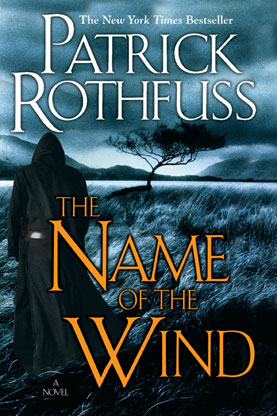
Review: The Name of The Wind by Patrick Rothfuss

For years, people have been telling me to read The Name of the Wind, the first book of the Kingkiller Chronicle trilogy by Patrick Rothfuss. I had many other things ahead of it in my reading list, and no one could really give me convincing reasons to read it, so I'd put it off.

I finally gave in and read it recently, and I have some thoughts. I will try to share them in as spoiler-free a way as possible, but I will discuss some of the basics of the book.

A Story About Storytelling
There are a lot of stories told throughout the course of this book. The conceit of the book itself is that the main character is telling his life's story. In that life, he is raised in a theater troupe, so they have more stories. As he searches for answers about something that happened in his past, much of the information that he seeks has fallen into legend, so more stories. Stories even seem to work themselves in when they don't seem especially relevant to what's going on directly (although a lot of times, these stories seem to come back later, and I imagine that they will prove relevant to the grander main plot in the next two books.)

As a writer, the varying stories told throughout the book are interesting to me. I'm intrigued by how Rothfuss portrays the story telling styles and focuses of the different storytellers throughout the book. Each storyteller has a different style, voice, and purpose behind the story that they tell. This is intriguing to me.

A Rich and Detailed World
Rothfuss has clearly put a lot of thought into the setting of his story. Complex and varied cultures with detailed histories breath life into the world. It feels like a world that has a life to it and is tangibly real rather than being painted up around the characters. The level of detail provided, be it linguistic, cultural, or even in terms of physical distances, is amazing and natural. Because it is told by the main character's story, it is generally mixed in narratively and conversationally, rather than drawing attention to the exposition. This makes it feel like the world fits into itself, rather than being forced upon the reader.

A Story so Real it Doesn't Quite Flow
One of the complaints that I have about the story is that it doesn't feel very focused. There are a lot of side plots and a lot of events that don't seem to tie in very well with the "main plot". In part, this is because it is a person telling their life's story, so there isn't a "main plot" in the traditional sense, even if there is, in fact, a defining purpose that drives the main character throughout the story.

A part of the realism of the story is that not everything that happens to someone is specifically focused on one story arc, event, or thing. The fact that it doesn't feel like how a story progresses is something that makes it more difficult to read (for me at least), but also at the same time more like real life.

An Unquestionable Gary Sue
The one thing that seems the most unrealistic about the story is the main character. He is a bit too perfect. He is good at everything he attempts, and he learns so fast that anything he doesn't know he can pick up with unnatural speed. Everything from magic to music to thievery to talking he is not just good at, but more or less the best at. He claims that he knows nothing about women, but he usually says the absolute perfect thing to charm them. He is a character who has almost no flaws, except potentially that his emotions sometimes affect his judgment. The conflicts he faces usually have nothing to do with his own faults so much as the circumstances of the world around him.

Concluding Thoughts
Overall, I liked the book. It's extremely well written, and the varying events in it, while often being largely disconnected, are almost all interesting in their own ways. It's not the next thing that I am going to pick up, but I will probably read the next book sometime. It seems like I could have plenty of time to get to it before the third book comes out.

Monday, October 24, 2016

NaNoWriMo and Me 3: Plots and Plans

When it comes to NaNoWriMo, and really when it comes to writing novels in general, there are varying philosophies on how and how much to plan out. Typically, NaNoWriMo has had two categories or classifications for writers based on planning.


Planners are the people who go into November with a detailed outline and a good idea of how they're getting from point A to point B. they have the shape of the story and just need to write it down.


Pantsers are the people who go into November blind, with no plans or idea what they are going to write at the beginning of the month. They are flying by the seat of their pants, as it were.


This year, NaNoWriMo has acknowledged a third category, the in between that it calls Plansters. This is, I think, where I fall.


I've tried a lot of different strategies over the years, to finally settle upon the method that works best for me. I don't claim that this is the best method for everyone, but it's best for me.


My Problem with Pantsing
I've tried to fly by the seat of my pants, with little to no planning at the beginning of the month. With this, I've had a few issues. First off, I don't know if my idea will actually go anywhere. Without a plan, I have a bad habit of going and then realizing that I've hit a dead end with nowhere to go. The other main issue I've had is just that without a plan a lot of what I write just isn't very good. Events don't flow together will. Things aren't connected in logical ways. It just doesn't work as well as I'd like.


My Problem with Planning
For me, a lot of the fun of writing comes with the discovery and invention of new plotlines/characters/settings. To some degree, I like thinking through ideas more than I like actually writing them. If I have a vast, complex, detailed outline, then I've discovered most, if not all there is to discover. Sometimes, when I've done this, I end up taking the story off the outline partway through, thereby discovering new things. But, if I find that here is nothing for me to discover or invent, I tend to lose a lot of steam and get bored fast.


The following are the steps that I generally go through when planning a novel. They aren't hard and fast rules, and oftentimes I'll be adjusting previous steps during later ones.


Step 1: Have an Idea
This can be both the easiest and most difficult step of the whole process. On the one hand, an idea is simple. It's little more than a concept. It doesn't need to have fully fleshed out characters or plotlines. Just a "wouldn't it be cool if there were a story about X?" Seems easy enough, but I've found that the times I try to brainstorm for an idea, I come up blank. It's when I have an idea and am trying to write that I end up getting a million ideas and being tempted to jump ship.


Step 2: Come Up with Your Main Character
You don't need to have a name at this point, but you should have some thoughts on the character's defining traits. What do they do for a living? What are some aspects of their personality? What is something they want?


Compelling characters are characters who want something. If your main character doesn't want anything, then there's nothing for the audience to root for. Their wants might change throughout the story, but they should always want something.


Step 3: Decide on a Beginning
Where does your story start? What is your main character up to? Whatever the central plot of your story is, what's it's condition at the beginning of the story?


Step 4: Decide on an Ending
Where do you want your story to end? Does your protagonist get what they want? How is the main plot of the story resolved?


Step 5: Make Supporting Characters
At this point, it's good to come up with some of the other people who will show up in the story. Who are the main character's closest friends and/or allies? Who are the antagonists? Is there anyone else who plays a major role in the story?


Step 6: Major Plot Points
After this, it's usually good to plan a few of the major events to take the story from the beginning to the end. I don't like to plan all the events of the story, and even those I do plan I try to only have a brief description of for planning purposes. Too much planning here can lead to future boredom.


Sometimes, in planning the major plot points, new characters might come into the picture. It is fine to go back and add, delete, or change the characters from Step 5.


After the six steps, you should have a decent outline and a good foundation to start from for writing.


If you've missed the previous two parts of my NaNoWriMo series, you can check them out here:


Pros and Cons


My History


Thursday, October 20, 2016

NaNoWriMo and Me 2: My History with NaNoWriMo

Sidenote: On Tuesday, I got the cover image for the first Heroism and Lies book. With the editing almost completed, I'm very excited to be on the verge of putting out the first book. The cover looks good, and I'm looking forward to sharing it with all of you soon.


In my previous post, NaNoWriMo Pros and Cons, I mentioned that I've done National Novel Writing Month for 10 years. Each year I've met the 50,000 word goal, but I've had mixed results in terms of what I've produced. I'm going to go through and look at each year of my NaNo participation, and see if I can pick out things I've gained from them.


This could be long and largely uninteresting to people who aren't me, but I am interested in the experiment of going back through.


2006: Y Rot Skcab

The title is "backstory" spelled backwards. Yes past Douglas, you are so very clever. *Rolls eyes*. So, 11 years ago, I was very interested in film and made very low quality movies (both shorts and full length features) with my friends. We had no budget and very little in the way of acting talent, so most of the things we made were hard to watch. Y Rot Skcab was my attempt at exploring the backstory of a movie that I was trying to create not long thereafter.


What I Gained:

Y Rot Skcab was my first year doing NaNoWriMo. I'd been surprised at how simple reaching the 50,000 words was. I also actually ended my story that year, probably just a little bit over the 50,000. There's a lot I like in the story, and there are ideas that have resurfaced in other things I've written as well as other RPG games that I've run. The characters are great, and I think through writing Y Rot Skcab I helped to flesh them out. I learned a lot about my writing in that year, and I gained plot devices and characters to use in future projects. I may well return to Y Rot Skcab's story and those connected to it one day, although I'll have to change it's name. And probably the name of the secret organization in the story (Destroyers of Evil Masters, Objects, Necromancers, Incasing ones, and Creations)...someone really wanted their name to spell DEMONIC.


2007: Catch the Wind/The Fiction Game

In 2007 I decided to write a story devoted to the girl I was dating at the time (and a couple that was close to us). Catch the Wind was a thrilling tale of high adventure about a "boy" with strange powers from another world who met up with a girl and together they tried to battle a sinister villain who was controlling strange monsters that were attacking them. Lots of elemental stuff going on. Then the girl and I were no longer dating, and I lost my desire to write a story for her.


So, I picked up a story called The Fiction Game, something of a parody of a story I'd been working on for a few years before that called The Reality Game. It was a book that acknowledged it was a book and was generally odd with irony.


What I gained:

Both these stories would go into future NaNoWriMo stories. They tickled my brain and, while they were underdeveloped, they formed the basis for bigger ideas that would come from them later.


2008: The Life and Death of Love and Worlds/Shattering Reality

In which I make the same mistake twice and cheat the rules of NaNoWriMo.


The Life and Death of Love and Worlds is a very long title for a book. I wouldn't have kept it as that, but I didn't have a better title in what I'd written. This was an interesting tale about a guy whose world was destroyed by a group of people that tear apart parallel dimensions for the fun of it, and so he goes dimension hopping to try to set things right and/or get revenge. This was also written for a girl, and I think that's why I lost steam in writing it.


Shattering Reality was a serial novel I'd been working on at the time and putting out one hurried chapter a week. When the long titled story wasn't happening, I started focusing on SR, and counting those words towards my word count, even if I had already started that story. (Although, I don't remember exactly, I may have ended the first book before NaNo started, so it would have been starting a new book).


What I gained:

Dimension hopping is something that comes up in my writing from time to time. I like it. It interests me. One of my current projects, Looking Glass Moon, uses it a lot. The setting for the RPG system I'm designing might use it a good bit, I'm not sure yet. The long titled book helped me to develop more thoughts and ideas on dimension hopping, and the "evil" organization in the book was great. It will definitely show up again.


SR in general was helpful to my keeping writing at a time when I otherwise had a lot going on. There were some good ideas there, and while it's not my best writing, and while I never finished the story (I got a good ways through book 3 and had 4 books planned), I think it helped me to grow as a writer. Sometimes I wish I could finish the story. Perhaps someday I will revisit it, gutting it of the issues that makes it unreadable for those separate from my life (it was largely written for people I knew so it had a foundation in things we had together.)


2009: Castor and Friends

This year I was juggling not only writing, but also being an Municipal Liaison for my local region. I planned gatherings for writers to come together and write together separately, tried to speak encouraging words, and generally did my best to keep things going. I was working with another ML who had been there before me, so my load wasn't too heavy.


Castor and Friends was sort of my first foray into a weird dystopia setting. I think I was trying to write something that was critical of society by dialing all it's problems up to 11, but I don't think it came across as terribly insightful or realistic. There was also some weird split personality stuff going on. It was a weird book. I don't like it that much.


What I gained:

Uhm...uh...aside from the general experience with writing more, I think I just gained an understanding of certain things that I don't do well. Odd mindscapes and exaggerations being among them.


2010: Blatant Acts of Heroism

My most successful year.


The former Municipal Liaison left, putting me more in charge. I pulled in another person from our ranks to elevate to ML and provide aid. We got organized. We advertised. We brought in new blood. Our group thrived. This was also the year that the alternative philosophies to NaNoWriMo came to my attention, and my other ML and I butted heads some.


Blatant Acts of Heroism took the outline from Catch the Wind and improved upon it. Now set with college aged heroes instead of high school, the story focused on Terra, a down to earth girl (yes, past Douglas, you're still so clever) who meets a boy from another dimension and gets caught up in vast adventures against her will. She is pushed on the path to becoming a hero and developing powers of her own, while a psychopath hunts them both.


I also doubled the word count goal. 100,000 words. And I still had more story left to write at that point.

What I gained:

Blatant Acts is by far the best NaNo novel I've ever written. It may be one of the better things I've written overall. It's definitely the closest thing I ever came to really publishing (aside from current projects.)


I learned a ton from Blatant Acts, and from the subsequent process of sharing it with people and getting their input. I learned about things that I did really well, and I learned about some things that were critically flawed in the story.


There's a decent chance that I'll turn my attention to Blatant Acts at some point in the future once more, and that it will make it to publication. But I have no active plans for this right now.


2011: Em of Maerd

No longer an ML, I could focus on my writing and my life.


Following the Fiction Game's idea, this was a book that knew it was a book. It was super meta and focused on an adventure-seeking, zeppelin driving girl named Em. It's other main characters were a writer who shared my name while being nothing like me and living in a flying invisible castle, and a homicide detective who had a habit of murdering people he perceived as being bad for society. Together (although also somewhat separately since they don't really trust each other or ever open up about anything), they investigate the death of a man named Bernard, while exploring varying forms of fiction and coming to grips with being characters in a book.


What I gained:

A story that I'd definitely like to revisit, and an increased sense of irony and meta humor.


2012: Monster Hunter?

New region. New writing group.


I honestly have very little memory of what I wrote this year, but I remember gathering 1-2 times a week and hanging out with other writers.


What I gained:

Many new friends and a group that would become my support system for my growth as a writer.


2013: Respice Finem

This was a book I was writing to a younger version of myself. It was the book I wished I'd encountered when I was younger. It was also my first step into magepunk.


What I gained:

If nothing else, an increased perspective on myself. But also developing a magic system taught me things that I continue to use and think about.


2014: Designs of Dragons

This book definitely wanted to have a high-action lighthearted comic-book feel to it as my main character began to develop draconic powers and abilities and found himself caught up in schemes and politics of men and dragons. It started pretty strong, but it became more politics and conspiracies than lighthearted comics, and I ended up setting my main character up to turn evil, which I didn't really want to happen.


What I gained:

Well, I'd love to go back to this story and do it right, but I'm still not quite sure how to do that. However, the style that I tried to develop in writing it definitely went into Heroism and Other Lies.


2015: Heroism and Other Lies (Episodes 101, 102, 103/2)

Heroism and Other Lies takes place in a future city and looks at the effects of technology, both good and bad. It has the comic-book feel that I'd tried to develop in Designs of Dragons, and takes place in short novellas, or episodes. I wrote two of these last year and made substantial progress on a third (although I'm going back through this one and basically starting it over from scratch this year.)


What I gained:

These books I do plan to publish. The first one, hopefully very soon. These are fun stories to write, and hopefully they're fun to read. Hopefully too, they get people thinking about the technologies that we're developing.


Concluding Thoughts

While I don't have a lot published yet, I do have a lot of experience that I'm drawing from as I progress further, and I have a lot of ideas that I've developed and can continue to explore for future publishable efforts.

Monday, October 17, 2016

NaNoWriMo and Me 1: 3 Pros and 3 Cons


What is NaNoWriMo?


NaNoWriMo is a shortening of the words National Novel Writing Month. In case you haven't heard of it, National Novel Writing Month takes place in November. During this time, writers from all over the world (Shouldn't it be International Novel Writing Month then? Yes, probably) focus their efforts together on separately writing novels.


The objective is to start from the first word of a novel, having nothing written of it beyond plans before the month starts, and end with a hopefully completed project, but at least 50.000 words.


There aren't really any prizes or fame or glory offered to the winners, but it is a tool for getting writers to write and it provides support networks to encourage said writers and spur them forward.


I've participated in NaNoWriMo the last 10 years (and will probably talk more about my history with it in future posts). Each year, I've reached the 50,000 words. Once I even doubled the goal. The actual quality of what I've written has been...mixed at best.


Over the years, I've developed a lot of mixed feelings about NaNoWriMo based on my experiences and the experiences of those around me.


Pros

1. Motivation

A lot of people want to write a novel. A lot of people might even spend some time working on such a thing. But a lot of time the motivation fizzles out. Life gets in the way. The novel gets set to the side with the promise of "well, I'll get to it tomorrow." The tomorrows pile up, and things go unfinished.


NaNoWriMo provides a solid goal and a deadline. It's trackable. It's focused. It has an element of rigor, while still being mostly in the realm of the achievable. Things like that help writers to stay focused. It helps people to take their free time and say "okay, I'm going to write a few hundred more words" rather than "I'm tired, I'll write more tomorrow."


I know that this is the case for me. I definitely let my writing go to the wayside when I don't have clear goals and timeframes laid out in front of me. But with NaNo, I'm able to focus and keep myself motivated, even if the reasoning behind the timeline and goal are pretty arbitrary.


2. New Ideas

NaNo is fast paced. The more that one has going on in their life, the faster one has to write in the time available. Because of this need for speed, I often find myself writing down the first event or idea that comes to mind when I'm going from point A to point B on my outline. Sometimes, what comes out is horrible. I'll get to that in the Cons section.


Sometimes, what comes out looks like sheer brilliance. Looking back over my work, there have been many times that I've thought to myself "I have no idea where that idea came from, but it's great." Ideas that I never would have thought of in a calm place with no deadline that bring things to light that I hadn't considered before flow out during some of the faster jaunts in NaNo.


I think that we have this tendency to overthink things, especially when there's no time crunch. I know that I have this filter that just hits an idea and a lot of times, without even really thinking about it goes "oh, that's stupid" and I write off the idea without giving it a level of consideration. The speed of NaNo helps me to get past my overthinking and past my filter so that I actually get ideas on the page and can see if they work or not.


3. Learning

Not every idea that comes across one's mind is a good idea. A lot of them are bad. And writing super fast, many of them will be. But, NaNoWriMo allows writers to experience both good ideas and bad ideas. It allows writers to take what they've done, evaluate that work, and learn from it.


Over the years, I've learned a lot about myself as a writer. I know more about what I do well and what I do poorly. I know more about what I like to write and what I don't. And these things are all things I can use to further my future projects.


Kit Bradley, an author friend of mine (who I met through my local NaNoWriMo region) told me not long ago about the idea of the "Thousand Pounds of Clay". Basically, as Kit explained it, there was a pottery instructor who had two classes. One he told he would grade based on their best pot. The other he told he would grade based on how much they produced-how close they got to a thousand pounds of clay. At the end of the semester, the class that tried to do a thousand pounds of clay had the better pots, because they had more experience. They had tried more things. They had failed more, and they had learned more from those failures. They had succeeded more, and they build off of those successes. NaNoWriMo provides the same opportunity, for those who want to take it.


Cons

1. Writing to Write

I've encountered different philosophies of participants of NaNo, and I'm not one to say that any are better or worse than any others. However, I think that philosophies can be contagious, and I've seen people given advice that I would claim is "bad" depending on their goals.


Specifically, I've noticed that there are participants who don't really care what they're writing. They don't really think seriously about or intend to get published or share their writing with anyone. They want to beat nano, but they don't seem to care a lot about the thing they're doing. They are writing to write. These writers will focus on word count above any other idea of writing, and will emphasize that others do the same.


While I'm fine with these people writing to write if that's what they want to do, I've seen the philosophy really mess up people who actually do care about what they're writing and want it to turn out well.


2. Quantity over Quality

This is the natural result of the above philosophy, but some people fall victim to it even if they aren't trying to have the above frame of mind. Now, I did say that speed and trying to reach a goal of a high word count in a short period of time is good. It is. To a point.


I've seen people pushing for word count putting through idea after idea as they come and hit upon a realization, partway through their story, that something that they have written is horrendous. It's something awful that throws off the entire story beyond that point. At this point, the writer has a choice. They can go back and try to work through the event they wrote, adjust it, change it, come up with an alternative, and therefore fix the story. They can try to think about what they'd do to fix it, write as if they did, and go back to fix it later. Or, they can keep going with what they've written, moving forward with a bad foundation.


More often than not in NaNo, I've seen people, caring more about word count than their story, chose the latter. At the end of the month, a lot of the time, these people realize that everything after the bad-point is awful-unsalvageable. They know that they'll have to go back to that point and rewrite most everything from there. They usually don't end up doing that.


A lot of times, this happens to people who would like their story to work, who would like to go back and fix things, but who have been told "No, keep going, don't go back, it'll slow down your word count goals."


These people can, and a lot of times do, learn from the experience. Whatever they did wrong, they learn how to better avoid it in the future, even if they don't learn to go back and fix things. So, it's not a wasted experience, but it's not as developmental an experience as it could be.


More often then not, in an ironic turn, the people who focus on words over story tend to get burnt out or get to places where they don't know what to write next. This prevents them from reaching the word count, leaving them unsatisfied with their efforts.


3. Lack of Follow Through

While November has set goals and objectives and timelines, once November ends, things are less organized. Everyone always commits to finishing their work. If there's still more to be written, people say that they they'll finish writing it. Everyone says they'll finish editing the writing. Groups say that they'll continue to meet and focus on getting things done.


In my experience, this happens rarely. There's a severe lack of follow through, and the efforts of the month end up falling by the wayside.


For a better idea of what I've written for NaNoWriMo over the last 10 years, and what I've gained from it, check out My NaNoWriMo History

Thursday, October 13, 2016

Heist Adventures 3: 3 Heist Campaigns

Leverage logo and images are property of
TNT and Electric Entertainment.
Because I've been working on a Cypher System adventure based around a Heist, The Wonder Vault Heist, I've been writing about running Heist Adventures in Tabletop RPGs.

If you haven't seen the other articles in the series, check them out here:


These articles have been focused on individual adventures. However, sometimes players and GMs will want to have an entire campaign based around heists. There are a few different perspectives to take with this, depending on the sort of game your players want to have.

Notably, heist-based campaigns tend to be more episodic, with each heist being a part of a separate job. However, sometimes there can be overarching plots or threads that connect the varying heists.

1. Independent Group
Your player characters are on their own. They have no one backing them and no leadership outside themselves. This is the most commonly portrayed option in television/movies. This is Ocean's 11, Leverage, the Italian Job, etc.

This group can be motivated by selfish/personal reasons, as is the primary case in the Ocean's movies. Maybe it's profit, maybe it's just independent ambition. This is sort of like an evil campaign, just with probably less death. Player characters in this sort of campaign have pretty loose morals and don't care if people get hurt from what they do.

They could also have a more Robin Hood type dynamic, fueled by some sort of moral driving to steal from the rich and powerful in order to right some sort of wrong. This is more or less the premise of Leverage.

An important part of determining how the campaign progresses is determining how the group will receive jobs. One of the easiest/best ways of doing this is by giving the player characters contacts who can pass word of opportunities to the group. However, it could also be done through player characters doing independent research or seeking out opportunities on their own.

2. Thieves' Guild
In a Thieves' Guild campaign, the players work for a larger group or guild which is designed around thievery and crime. The extent of the influence of the group may vary depending on your setting and the campaign outlook you have.

Usually, the primary goals of a thieves' guild are profit and infiltration/control, with motivations and moral ranges similar to the selfish/personal group type motives.

A thieves' guild campaign has the added benefit of having a structure from which the missions can be given to the group.  This makes things nice and orderly and allows for moving things forward easily. Also, it provides an easy way of having knowledgeable NPCs who can help the PCs plan heists or gather information about their targets.

A potential campaign arc might involve having the PCs start as fledgling members of the thieves' guild, and have to work their way up the ranks. Possibly, there is inter-organization competition and politics which the PCs have to wade through and eventually overcome. This could all eventually result in the PCs rising to become leaders of the group, or even potentially start their own.


3. Spy Agency
Spy fiction seems to have almost as many heists going on as crime fiction. Oftentimes, this is breaking into an enemy base of some kind, but sometimes it's even more convoluted than that. Spies seem to sometimes even need to break into places controlled by allies or even neutral parties to gather intelligence, technology, research, or some other McGuffin.

Having a spy agency allows for all/most of the benefits and opportunities of a Thieves' Guild campaign with none of the moral ambiguity. Well, to be perfectly honest, spy stuff does tend to have a lot of moral ambiguity involved in it. However, usually a spy agency is committed to some purpose or goal other than wealth/selfishness. This could be dedication to a country, opposition of an enemy, or something else depending on your setting. This provides an advantage if you want to have heist adventures, but have players who don't want to play selfish/evilly motivated characters.


A spy agency also lends itself more readily to ongoing plots, with each heist revealing more about something sinister and convoluted going on, with recurring enemy factions, and with a structure that mixes investigation and thievery together.


Hopefully, if you're looking to run a heist campaign, one of these ideas will be helpful to you.


If you'd like to see a heist adventure that I've put together, check out The Wonder Vault Heist when it comes out next month.

What other ideas or suggestions do you have for running a heist-based campaign?