Showing posts with label Characters. Show all posts

Thursday, March 2, 2017

Teamwork and "My Guy"ism

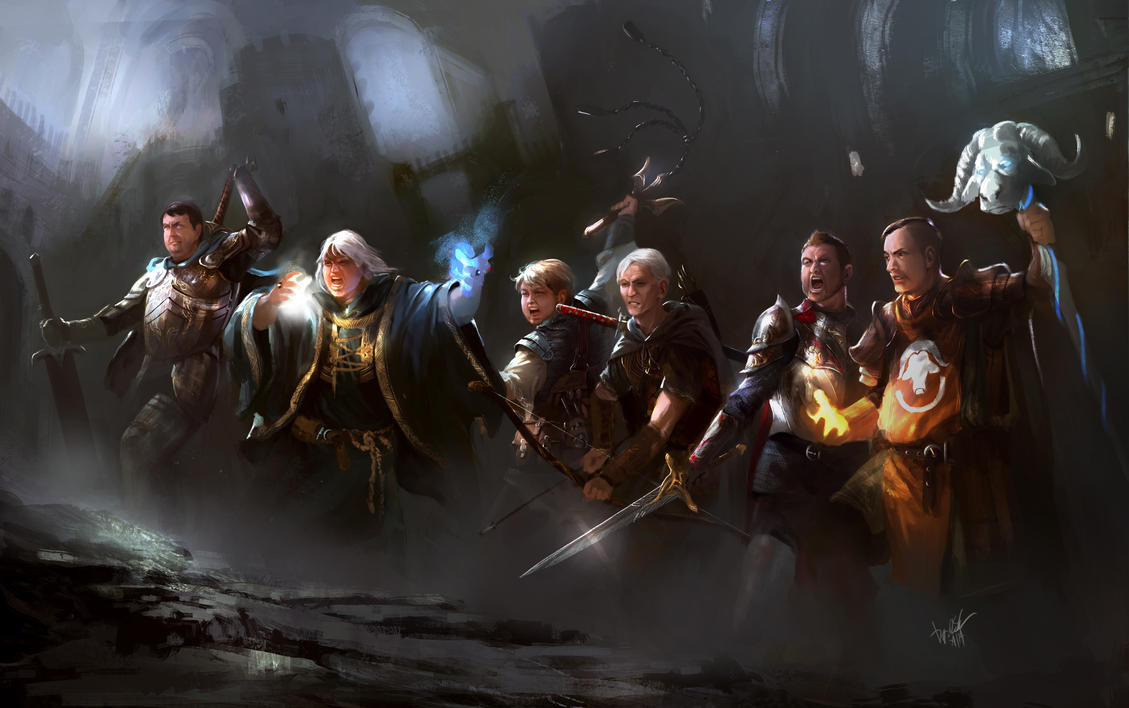
"Brave Team" by DiegooCunha
For more by this artist, see:
http://diegoocunha.deviantart.com/
My writer friend Kit Bradley was the one who first drew my attention to what he called "my guy" ism. This was a tendency that some players have to say "well, my guy would do this/wouldn't do this/would act this way" in justification of roleplaying decisions that may be harmful to the enjoyment of the group as a whole.

This is, to some degree, one of those "do as I say and not as I do" sort of posts. I know I have a bad tendency towards this as a player, and it's something I try to work on in the times when I get to play anymore.

Not to be Confused with...

Before I go into this, I am not saying that roleplaying your character is bad. I'm very pro roleplaying. I'm even pro roleplaying characters who are selfish or deceptive or unintelligent or otherwise not 100% helpful to the interests of the player character group. I wrote a post recently even providing advice to players on how to roleplay effectively.

This is about when roleplaying goes too far and makes the game less enjoyable for other players. Sometimes, that's a hard line to distinguish. It's even harder given that some groups may be more in favor of certain things than others and that some games/campaigns have different norms. (For instance, if you're playing Paranoia, you can probably throw out pretty much everything in this post.)

A Dirge for Malego

When I was fairly new to the hobby, and younger and less mature than I am now, I created a character named Malego. Malego was a tiefling (read as: mostly human, part demon, for those who are unfamiliar) rogue. He was super depressed most of the time, and tended to not really like working with the team.

One of the first fights that he got into with the team, he ran off on his own rather than sticking or working with the team, and it led to his being captured and eventually killed.

I played three different characters in that campaign. I remember, in talking to one of my friends in that group, being surprised when they had said they hated Malego/hated when I was playing Malego. I was surprised since I really liked him. I thought he had a lot of personality and life to him. As it turns out, he really got on other people's nerves and they weren't all that sad about his short tenure with the group.

I remember when he died, the GM saying that it was an example of a character that was roleplayed well, but that didn't really fit with the group. I didn't really understand what he meant at the time.

Tabletop Games are a Group Activity

Different people might enjoy different things about tabletop RPGs. Some might like the mechanics and game aspect to it. Some might like getting to act and play a character unlike themselves. Some might like exploring a fantastic world. Some might like enjoying a group story. Some might even just be there as a social activity. Some might like exploring different philosophical ideas behind the guise of fiction in order to make themselves and others better. Most people play tabletop RPGs for some combination of these reasons and a few others. But, whatever the reason(s), people play because they get some form of enjoyment.

The way tabletop roleplaying games are set up, generally, is that you have a game master, and then you have players working together as a team. In the game, they work together to achieve objectives.

In real life, you have a group of people in a room wanting to enjoy themselves. This is what is actually happening, and to some degree the reality should take precedence over the fiction.

There is no guy. The "my guy" from "my guy would act this way" doesn't exist. The character shouldn't get preference over the real live people who are in the room with you.

When a Player acts their Character in Certain Ways, they can Reduce the Enjoyment of the other Players

There are a couple primary ways that I've seen this happen, and I've been guilty of most of them. It's probably something I still need to be aware of and work on as a player.

By no means is this a complete list:

Acting Without Group Consensus (Before/Without Discussions)

This one is pretty iffy. Sometimes, especially if your team is in a situation where fast thought and action is required, acting on your own without group consensus is necessary and/or good.

However, there are other situations in which progressing or acting on one's own reduces the agency of the rest of the group. When a player acts without group consensus, especially if their actions are such that they could affect the group as a whole, they're saying "I know best, I don't need to consult any of you."

they take away the ability for the rest of the group to have any discussion or decision making. Remember, tabletop RPGs are a group activity. If a player is making all the decisions or causing everything to happen on their own, they're cutting away everyone else's experiences. They're playing as though the game is a one playered game focused on them.

Being a Jerk to Other Player Characters (During Discussions)

A lot of times, the way that this happens is that a player/their character will either be dismissive or insulting of something another player/player character says. They treat the idea as stupid and/or not worth considering. Either the player or their character thinks they no better than their teammate and expresses it as contempt or superiority.

When this happens, a lot of times, players feel that they, rather than their character, have been directly insulted. It raises negative feelings, and more often than not makes that player feel that they can't contribute to group discussion/planning. This can lead to them closing up more and speaking up less in the future. It can also lead to frustrations that make them no longer like playing with that group.

A lot of times, players are already self-conscious. This behavior doesn't help.
Many of the people who Tabletop RPGs appeal to are by their nature introverts. Many of them have social anxieties, and being insulted or disregarded can aggravate these more in what should be a fun activity

Acting Against Group Consensus (After Discussions)

Sometimes, even after the group has made a decision, a player who opposed the decision will go off and do what they wanted to do anyway. This is extremely problematic and can make other players feel that they have been entirely disrespected. It cheapens the process of group discussion and can leave a taint on future group discussions and decisions with other players either giving in because the one player will do what they want anyway, or with them acting bitterly towards that player because of their actions previously. Either way, it has the potential to create a rift between the player/character acting against the group's decision and the other members of the group.

Respectful Group Discussions

In most/all of those examples, the problem comes from players feeling like they don't have agency/like they cannot contribute to the decision making process.

Some people might look at the "acting against group consensus" reasoning and claim that when the group decides against their idea, the group is reducing their agency. I'd claim that there's a difference, mostly that comes from consensus and respect between group members.

Everyone is not going to get their way all the time. However, by being receptive to others ideas, group conversation can explore different ideas and create a welcoming environment for players.

Discussion between group members should encourage everyone to participate and offer any ideas they might have. All ideas that are offered legitimately should be looked at respectfully. Even if there are obvious holes in the ideas, a player shouldn't be made to feel bad for not noticing the hole. The group should work to come to a consensus and move forward together, with people feeling like they've been heard even if their idea wasn't the one that was chosen.

"But I really want to play a selfish/manipulative/jerk character"

Okay, great. These can actually be a lot of fun to play. And they can be fun for your group as well. IF you don't direct your selfish/manipulative/jerk side against your teammates. They're your teammates after all. Stealing from them does you no good. Sharing the spoils of your thievery with them helps lift them and, in turn, you up higher than if you kept it for yourself. Manipulating them does you no good. Manipulating every other NPC to the benefit of the group is a good show of cleverness. Being a jerk to your teammates just makes them less likely to help you. Being a jerk to other people...well...it probably won't cause much good either, but it might cause entertaining results rather than making your friends mad at you.

In the end...

I know I said it already, but I want to reiterate.

I'm very pro realism in roleplaying games. However, I draw the line at making the experience worse for your group-mates.

Your character is not real. Your friends who are playing the game with you are. They should get priority.

Friday, February 3, 2017

Roleplaying Tips for Players


I think that something I take for granted, as a Game Master, possibly something we all take for granted, is the idea that those playing tabletop roleplaying games know how to roleplay. Frankly, this just isn't true for everyone who will be playing with us. Sometimes, it isn't even true of ourselves.


I remember when I started in the first campaign that I would play in for an extended period of time. Most GM's don't really talk about roleplaying with their players in advance. Mine was no different, even though none of us had really played anything before. It's a tactic that I, too, have adopted in running my own campaigns most of the time. I think it's because we, as GMs, don't really think about the fact that roleplaying isn't inherently intuitive. I know that as a roleplayer without guidance, I developed a lot of bad habits that I wasn't even aware were wrong until a few years later when I was told by the GM and one other player-after I'd already been doing these things time and time again.


I know that I've also had players who do things that are problematic, not out of maliciousness, but just without knowing to do anything better.


The point is that things aren't necessarily straightforward. Therefore, I decided to try to put together the best advice I could come up with based on what I've seen go right and what I've seen go wrong in games I've run and played in.


The following advice is things to do as well as things not to do. It isn't just about improving your roleplaying ability, but it is also about improving your ability to roleplay together with a group and enjoy a story that is fun for everyone.


None of these rules are absolute. If you're playing Paranoia, you can probably ignore most/all of them.


1. Know Your Character

Almost everything that follows comes from this core point. Know who your character is. Know how they think. What's important to them? What motivates them? What are they afraid of? Each of us are a made of a sum of beliefs, motivations, fears, personality quirks, etc. Know what those are for your character, and it will help you play them.


Think about how their personality relates to the abilities they have. If they know a lot about history, what is it about history that interests them? If they have a lot of sneaky backstab abilities, what does that imply about them? Your characters mechanics are a part of who your character is. The things your character chooses to learn or excel at are things that relate to who they are as a person.


A lot of time, knowledge of your character will develop as a game develops. The more your character faces, the better idea you'll have of who they are, what they want, and how they react to things.


2. Always ask Why

This second rule is probably the most important strategy to developing good roleplaying skills.


Most things you do in real life, you just do without thinking about it. However, if someone asks you why you did that thing, usually you can come up with some answer. It should be the same for your character. The things your character does and says should be things your character has a reason to do. As you get to know your character, before taking actions or talking in character, quickly ask yourself "why is my character doing/saying this?" If you can't answer that question, then it might be best to do something different.


The longer you play as a particular character, the better you'll understand how that character thinks, what motivates them, and how they act. Your asking why will be less deliberate as assuming the role of the character becomes more natural for you.


3. Don't Act on Information Your Character Doesn't Have

One of the hardest things in the world for players, including myself, is to not use meta knowledge. There is a tendency to see the game as...well...a game. Something that we're trying to win. We want our characters to be victorious, and often we favor using meta knowledge even if that isn't something our characters would know. Depending on how the game is focused, this may be okay. However, it isn't good roleplaying.


If you know something about a creature or situation because of some prior experience, it's bad roleplaying to have your character act based on that experience. It isn't necessarily experience your character has. Unless you've worked out with the GM a situation where you've faced that sort of creature or situation in your character's backstory, then your character should be forced to depend on knowledge rolls or trial and error to figure it out (no, you shouldn't just happen to try the right thing first. Think about what your character would *actually* try if they didn't know what you know.)


Likewise, if another player character learns something via a knowledge check or a side encounter, your character should not be motivated to act based on this knowledge unless that player's character shares that information with yours.


When you ask "why is my character doing/saying this?" if your answer is "because I know X" or even "because of X" where X is something your character doesn't know, then you should probably do something else.


3m. Don't Talk About Information You Know but Shouldn't

Here's one that I'm bad at. If you know about a particular enemy or situation that your character doesn't know about, especially if other players don't know about that thing, don't mention your knowledge. If you tell them about the enemy or situation, you ruin their ability to learn for themselves, and you make them more inclined to roleplay badly. If you talk about knowing something but don't say what it is, then you risk irritating your friends, and you also break some of the realism of the game.


Generally, making a meta recommendation to a player whose character has a knowledge skill that might help them discover information about the enemy or situation is alright, but it may depend on your group and how that suggestion is made.


4. Develop Quirks, Mannerisms, or a "Thing"

It's easier to play your character if there is something unique and recurring about them. This might be a quirk, an accent, something in the manner they speak or walk, or maybe a hobby or obsession. Either way, it should be something that comes up relatively often and which you and your fellow players come to associate with your character. That way, there's a uniqueness to your character which can make them fun to play.


If you're having trouble with this, here are some questions to help you brainstorm:
  • Is there anything unique about how my character talks (accent, word choice, etc)?
  • Does my character have any physical mannerisms/ticks? (Bonus points if this is something you can actually physically do while seated at the table, as that will help to maintain the realism and sustain the imagination of the rest of the group.)
  • Is there any odd object that my character carries with him/her and/or collects?
  • Does my character do anything odd in their spare time?


5. Don't Insult Other Players/Player Character/Ideas

It doesn't matter if one of the defining attributes of your character is that they're a jackass, players don't like being put down. If you're roleplaying a jackass, sometimes the players on the receiving end can lose the sense of the line between game and real life, and can feel like you are attacking them personally, rather than your character tearing down their character. So, it may be good roleplaying, but it's bad playing overall. I've had groups where players have left or just felt awful while playing because of tension caused by other players who were just trying to roleplay.


This also goes for ideas proposed by other players. Even if we disagree with a strategy/idea/way of handling a problem or moving forward proposed by another player/player character, it is important that we handle the idea respectfully. If a player feels that you are shutting down their ideas or that you think they are stupid, then it may force them to shut down and be less likely to contribute in the future. This makes the game much less fun to that player, and isn't fair to them. This isn't to say that you should always support everyone's ideas, but if you disagree with them, you should express your disagreements in a friendly, respectful manner, being careful not to attack it or the person offering it.


Roleplaying is a high priority in most groups, but it shouldn't be prioritized above having an environment where people feel safe to share and have a good time.


Likewise, if you choose to roleplay a character who is a jerk, it makes sense for the rest of the group to roleplay people who don't want to hang out with a jerk, and you may lose your place in the group altogether.


6. Don't be a Lone Wolf

I think there's a tendency in some players, myself and some of my regular players included, to play characters who are a bit of a loner. These characters don't like relying on others, and they like going off on their own and doing their own things.


This...isn't the most conducive to a group roleplaying game. Tabletop roleplaying games are generally group activities, so it's important to make a character with that in mind. Even if your group doesn't start as a team together, they are all going to be working together through the duration of your adventure/campaign.


If you're playing a character who likes being on their own/doesn't trust or work well with others/otherwise would resist working with the group, it ends up meaning that either you get left behind-in which case you're no longer playing the game, or that something has to happen to force you to work with them. A lot of times, this is either the other players accepting you into the party despite your actions which would make most people disinterested in your participation, or the GM utilizing some 'hand of God' plot device to keep you all together until you learn to accept them. Both of these are a bit forced, and both of these cause issues with the suspension of disbelief of the group as a whole.


You don't have to play an easygoing extrovert character, but you should play a character who would be inclined to work together with the others in your party.


7. Act and React

Sometimes, games get a bit stagnant. I know that I, as a player, tend to freeze up if I can't think of the "right" thing to do. But, we have to remember that the game may be a game with definable objectives, it may be a story with a linear progression, but it also can be a world (depending on your GM's style) to be explored. Just like in real life, there's not always a "right" thing to do next. Nonetheless, something has got to happen. If your players are just sitting around in safety, it may be up to you to make that happen.


When the game seems stagnant, ask yourself "okay, what would my character do?" See if anything comes to mind. Think about any goals your character has-short or long term. Is there anything you can do to work towards them? Is there anywhere you can go that might provide your character with answers to questions they have? The important thing is to do something. And, when you do, the choices you make bring out more about who your character is and what's important to them.


8. Change and Grow

You aren't the same person you were a year ago. You certainly aren't the same person you were five years ago. The same is true for your character. As they go through different events, they are going to change. How are they affected by getting or failing to get what they want? How do their relationships (friendship, animosity, etc) with other members of the group or other NPCs grow over time? What do they learn from their struggles and adventures? How are they shaped by their victories? How are they shaped by their defeats? Do things that were once important to them become less important? Do other things take the place of that 'important thing?' Does their motivation grow and change with them?


Resources

If you want to read more tips and pieces of advice, check out the following articles.

Geek and Sundry:


Look Robot:


Friday, December 2, 2016

Thinking About Character Sheets

In preparation for this weekend's session, the Web of Wavemeet, as well as my future Toybox campaign, both utilizing the system of my own design, I've been thinking about character sheets.


My system uses four primary Factors to determine character ability: Body, Mind, Voice, and Essence. When I was building my pregens, it was easiest for me to lay things out in a quad-type layout, with each factor getting it's own section, under which I list the resources, skills, abilities, attacks, and armor associated with each.

I've been debating if this is a reasonable way of actually laying out a character sheet, or if it would be better to have a section that gives the core factor values with their resources and maybe armor separate from a section for abilities separate from a section for skills and so on. I think this second is probably be better way of doing things, which is unfortunate just because it means reformatting everything I've done.

My next concern is, perhaps, less significant, but not insignificant altogether. How to layout the sheet. Do I want to have a portrait oriented page, or landscape?

When I first started getting into Numenera, I thought that the character sheets looked really cool. They had this cool tri-fold structure where they folded up like pamphlets, which seemed new and nifty to me. They also had a lot of really cool decorative drawings across them, which was pretty neat too.

However, when I started designing characters and trying to put the information on them, I found that these sheets weren't the most efficient. I was frustrated with not being able to really list out my abilities, or even my equipment very well. I felt like there was a lot of wasted space. To begin with, there were entire sections, mostly those on the front, that I either wasn't using at all or was using very little. But, on top of that, all the nifty drawings and artwork, while looking cool, was taking up space that could otherwise have been used for actual information.

Because of the lack of space, if I was using the Numenera character sheets, I would have to have another page on which I printed the full text of my abilities, which, in my mind, sort of defeated the point in having them written on a character sheet.

Recently, Monte Cook Games has come out with a character portfolio that you can download and print which addresses this, mostly by adding a lot more pages in which you can put additional information. I'm fine with that.

But that didn't exist at the time, so I made a bunch of my own character sheets. Since a majority of my experience before Cypher System had been 3.5/Pathfinder, I laid out my custom sheets more or less exactly like the ones for those games, and this worked for me. Eventually, I made sheets trying to imitate the trifold layout of the Numenera sheets, but making a better use of the space. This worked out pretty well too.

But now I'm just trying to decide what to do with my own.

What do you think? Are there character sheets that you've particularly liked or not liked? What do you like or not like when it comes to character sheets?

Tuesday, November 1, 2016

Publication Day: Wonder Vault Heist

I have released my second Cypher System adventure, The Wonder Vault Heist.


If you've read my posts on heist adventures, this was the adventure I was designing that got me thinking about them.


This is a heist adventure designed for a science fantasy setting, but which could easily be converted to other settings/systems.


The heist revolves around a mechanical/mystical vault, left by the ancients, which can bend space and time, and the sinister group that controls it. As the players get closer to the wonder vault itself, they learn more about their enigmatic employer, and about the events of the past which tore a rip in space and time where the vault now stands.


If you haven't checked out my posts on running heist adventures and are interested in making/running your own, see the posts below:


Heist Adventures 1: 5 Challenges


Heist Adventures 2: Tips and Advice


Heist Adventures 3: Heist Campaigns

Friday, September 30, 2016

7 Recurring Characters for Your RPG or Story

In case you don't know what a recurring character is, the idea is simple. These are characters who show up from time to time in a story, but not so often that they're considered one of the main/supporting characters.


In a TV show, this might be a character that shows up in a few episodes each season, but that aren't in a majority of the episodes. In a book series, it would be a character that's in multiple books in the series, but not all of them (think Michael or the Alphas in Dresden Files). In an RPG, this could be an NPC that the party sees several times, but that doesn't show up every session/adventure.


Why Use Recurring Characters?
Put simply, audiences, be they readers, viewers, or players, like familiarity. They like when a character walks onto the screen and they know what they can expect from that character.


Because they aren't part of the main cast, sometimes recurring characters can be more dramatic or shake things up more than people who are always present can (since those who are always present generally have to maintain similar relationships to everyone else, or primarily make choices that can later be readjusted back). This allows these recurring characters to sometimes leave more of an impact on the audience, gaining a particular following and favoritism that gets audience members excited when they know that character will be returning.


It's good to use recurring characters when possible. Rather than introducing a new character and adding to a growing cast, putting in a familiar face helps the audience to connect by utilizing an already established connection.


Examples of Recurring Characters
1. The Old Friend
This is someone from the past of one of the main characters. One of the more common/effective uses of this character is to have them be a former best (or at least close) friend of one of the main characters. They may still consider themselves to be friends, but they certainly aren't as close as they once were.


One of the benefits of the old friend is that it allows the rest of the main cast (as well as, or even more so, the audience) to learn more about the regular character's past. Possibly, if the regular character talked or acted differently in the past, the old friend being around may even cause them to revert back and pick up some of their old habits.


In addition to this, drama can be ramped up in a few of ways. The regular character who is friends with the old friend may care a lot about getting the rest of the main cast to like the old friend. Dialed up if the old friend is expressly the sort of person the main cast doesn't get along with, or vice versa. The old friend may be jealous of the regular character's friendship with the rest of the main cast, or vice versa. Further, the old friend may have changed from the person the regular character remembers. This could create tension as the change makes the two less compatible, or if the old friend tries to hide this change. It can also be played the other way, with the regular character being the one who has changed, and this can even be used to show character growth. Another way the recurring character might hide things about themselves is if they are just trying to use their friendship with the regular character for some advantage that they are otherwise keeping secret: money, a place to stay, access to the regular character's work or friends, etc...


This is more commonly used in sit coms, but it could be worked into RPG scenarios or other works as well. In an RPG, having people that one of the PC's grew up with show up is always interesting. Maybe they lived in the same village as kids. Maybe they trained at the same academy or went to the same school. Maybe the old friend is a member of the PC's former adventuring company.


2. The Needy Relative
A person connected to one of the main characters shows up. They need something. They may or may not be open with the main character about that, but their presence will be clear to the audience as a metaphorical weight around that character's neck.


There may or may not be some overlap with this and the old friend, especially as many relatives tend to have ties to a character's past. Relatives also have ties to a character's present by way of the family, and can be a way of showing the people a character is connected to in that way. If other family members have shown up previously, a relative showing up can provide an update on the status of something going on with that family member, helping to establish more familiarity with the audience and providing them more information on a situation they might care about without having to do a whole episode/scene/chapter/lengthy thing about it.


Drama with the needy relative usually comes from the need. Like the old friend, they may be concealing this need and plan to take advantage of the main character covertly. Possibly they are a pickpocket who is fleecing the main cast for every dime they can get, or possibly they are less sinisterly just trying to use their connections to gain an advantage-maybe a job or access to someone for which they have feelings. They may, however, be open about their need, relying on the character's sense of duty to their family or general righteousness to gain their help.  Possibly, it might be a health issue or something else for which the expression of the need isn't desired by the relative, but that it is necessary.


This is common in dramas, sit-coms, and the like, but it can be used in any story.  In an RPG, nothing motivates a PC so well as someone they already like and have connections to asking them for help.


3. The Love Interest
Used in stories where the love interest isn't also one of the main characters, this is someone that one of the main characters has affections for.  If it's a recurring character, it's often a plot that advances in phases over time, but sometimes not.


Usually, the main character will develop affections for the love interest, and there will be a pre-relationship phase where the audience is teased with the will-they/won't-they drama. If the love interest doesn't reciprocate the main character's feelings, then they usually don't stay in the story for very long after, making them less likely to be a recurring character.


Once the couple enters the relationship phase, the character is free to come and go in the story as a tie to that main character as needed and for any number of uses. This can reveal things about the main character and how they treat relationships, but a love interest can also be used as an extra main character for stories where an extra person in the group would be helpful.


In RPGs, many groups don't like to utilize romantic plots due to awkwardness of the meta-issues of a DM and a player playing characters that have feelings for each other, especially if there are romantic relationships going on in real life between any of the involved parties. That said, for the groups that do utilize romantic plots, it can be a strong motivator for PCs. A PC will go to great lengths to win the affections of a love interest, and once having them, they will often do many things for that love interest to support the relationship and show their love. Love interests endangered motivate PCs, but this should not be done so often that it makes PCs afraid to develop connections to people for fear of being punished by their loved ones always being in danger.


4. The Ex
Maybe the main character had broken up with their ex at a point before when the stories began, or maybe she was once a love interest who moved down to this position, having a former flame show up in a main character's life is a sure way to generate drama.


The ex can be utilized in a number of ways, depending on how both the ex and the main character they are attached to feel about each other at present. If one wants the other back and the other doesn't, there are a series of issues that come with how they handle that. It could potentially even show character growth in a main character who has moved on. If they both have resentment towards each other, the return of the ex can be antagonistic to both sides. If they both want to get back together, then either the ex might move up to being the love interest, or they might be reminded of why they never worked out in the first place.


3. The Co-Worker
This is someone that one of the main characters works with. The main character usually either likes this co-worker, or they don't, but they're rarely undecided.


If it's someone the main character likes, then they may have a similar effect of the needy relative, using this affection to try to get the main character to help them with work projects to boost their own success. If a friendship develops with the co-worker, they might have some similarities to the old friend, with tensions being caused if the co-worker doesn't get along with the rest of the main cast, or if there is jealousy on either side. It may become a workplace romance, going into the territory of the love interest, but adding any tensions of having to work together on top of their romance.


If it's someone the main character doesn't like, the issues caused can range from annoyance (see Patrice from How I Met Your Mother) to active sabotage from either side. If this co-worker is in the same position as the main character and they are both competing for the same projects/jobs/promotions, it may extend into the territory of the rival.


4. The Business Contact
This is someone who a main character has to work with for their job, but who they don't see regularly. In spy fiction, it may be a contact on the ground in the location. For someone who works in an office job, it might be a supplier or a potential client for their business. Usually, these contacts don't work/live near the main character and they show up either if the main character goes to their location, or if they come to visit where the main character works.


5. The Staff Member
This person works somewhere. Somewhere the main cast goes often. Maybe it's a bartender that shows up from time to time. If the characters are accident prone or have health issues, maybe it's a doctor (one of my favorite recurring characters is the doctor in Arrested Development). Especially in RPG games, it could be a quirky and interesting shopkeeper.


These rarely increase the drama or plot of the story, but they do help to provide familiarity. If they have defining/interesting personalities, they can also provide humor or fascination for the audience.


6. The Villain
This is the bread and butter of comic book superhero stories. This is the Joker, Loki, Dr. Doom, the Riddler, Green Goblin, Lex Luther, etc...


These are the characters who show up over and over again and ruin the main character's lives.  They pose a threat that forces the main character to act or lose something important. When they come onto the scene, they come with all the existing tensions of the previous times that they've fought against the heroes.


Audiences like recurring characters, but they love recurring villains.


For me, I think that a lot of times I find myself rooting for the villain even more than the hero, and I don't think I'm the only one who does. Something about villains fascinates us. We want to know how they think, how they do what it is that they do. Add to that the familiarity of seeing them over and over again, and some additional quirks and attributes that charm an audience, and you've got a recipe for something audiences can't turn down.


In addition to all that, we as people process most things through conflicts. Through overcoming adversity. This is what the majority of stories are about. Seeing the hero in conflict with a villain is the story conflict going back through the ages. It's familiar. It speaks to us on an innate level. Having a recurring villain of great power magnifies that over and over again.


The biggest issue with recurring villains, especially in RPG campaigns, is how to keep the heroes from killing them.  In stories, it's easy, because the creator controls both sides of the board. The heroes have qualms about killing people, or the villain has an escape route and gets away, or the hero puts the villain in prison (only to have them escape later on. Seriously, does Arkham just have a revolving door in the back of it?), but one way or another, it's easy in fiction to make the villain able to come back later on.


In RPGs, where PCs are often murder-hobos, it's a little bit harder. If they enter combat with the villain, they're often going to kill said villain, making it harder to make them recur. Here are some suggestions for how to deal with that: You could have the villain interact with them in settings where they can't kill him. Maybe he's a well respected noble and they meet him at a party where no one would believe them if they accused him or tried to battle him. Maybe he's talking to them from atop a cliff or otherwise in a place they can't reach. You could have the villain interact through minions or messages, which makes their presence recurring, but it doesn't seem to actually have the villain itself be recurring. You could use things like holographic projections or robots that look like the villain which are directly controlled by the villain. You could make sure the villain has an escape route whenever the PCs would encounter them. (This should be done carefully, as PCs are clever and may find a way to cut off this escape route, or, especially if the villain tries to fight before taking the escape route, they may kill the villain before he/she can escape. The only way to be sure of an escape would be to fudge die rolls or how much damage the villain is taking, which some people may see as underhanded/unfair GMing, even if it is for a better story.)


One way of having a villain recur, either in stories or RPGs, that I am wary of, is bringing them back from the dead. I'm not saying that this can't be done effectively, because it can. I've seen great examples of it that I've really liked. However, if your work, be it an RPG, or a book, or a tv show, or anything else, brings people back from the dead too much, death will become meaningless. Your audience will stop caring when people die, which takes away the emotional consequences of death in your story.


7. The Rival
One might consider the rival a subset of the villain, but it is a subset that is specific enough that I wanted to talk about it.


The rival is a great recurring character. It is someone who reminds the audience of one of the main characters, because the share many of the same attributes. They're good at the same things. Oftentimes, if the story is of a sort where things like darkness or evil make sense, the rival might be seen as a dark/evil opposite of the hero, using the same skills and attributes in more sinister ways.


But one of the things that makes the rival particularly compelling is that they usually want the same thing the main character wants, and that thing doesn't split between them. Maybe it's a promotion at work. Maybe it's the affections of a particular love interest. Maybe it's a lost relic of an ancient civilization. Maybe it's a super weapon.


The rival is great because it raises for the audience the tensions of a race to the finish line as well as questions about which side's skills and tactics will prove superior. Since usually (but not always) the rival is more willing to be underhanded than the main character, they have something of a leg up from the start.


What other recurring characters have you found that you've liked? What do you like about them?